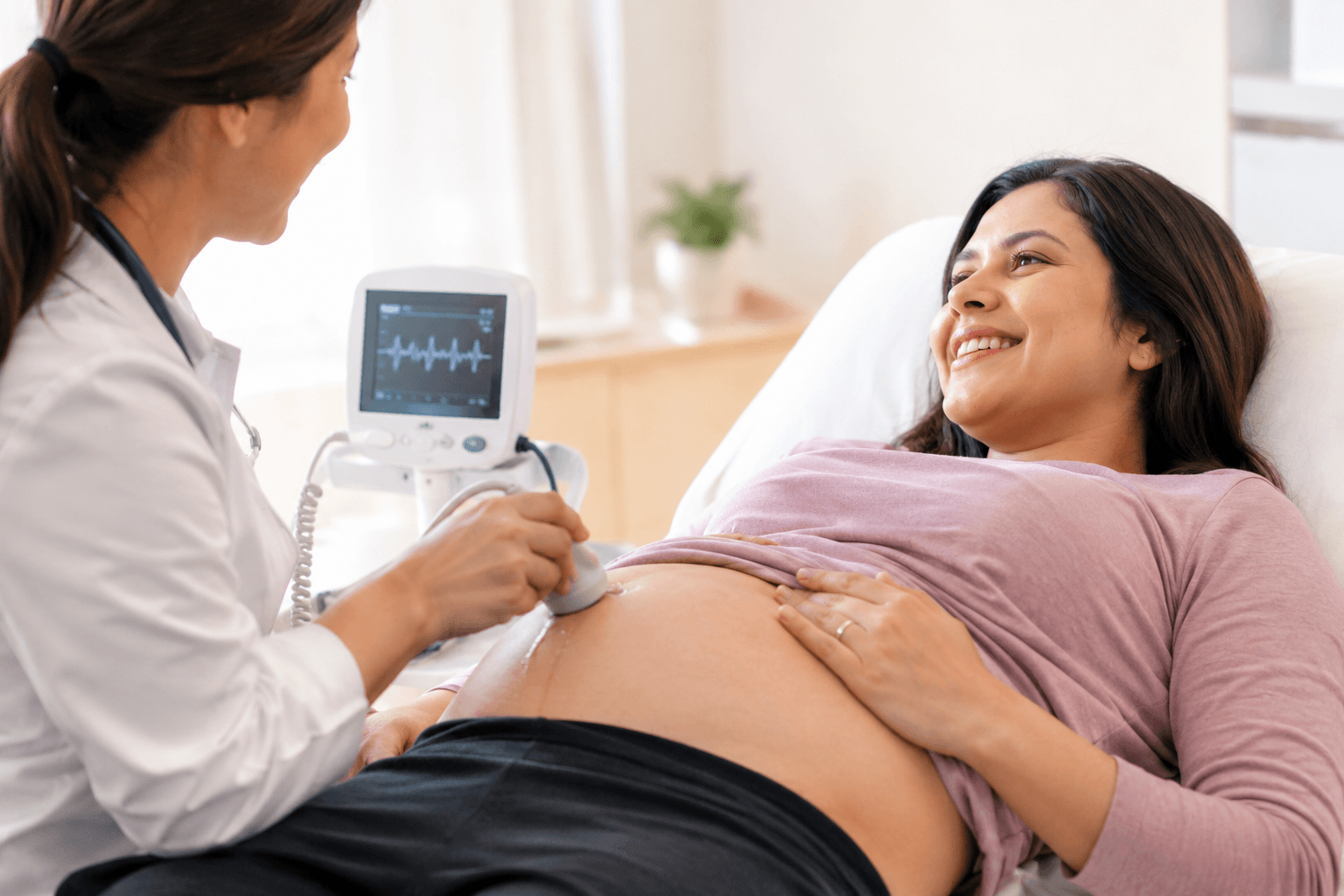
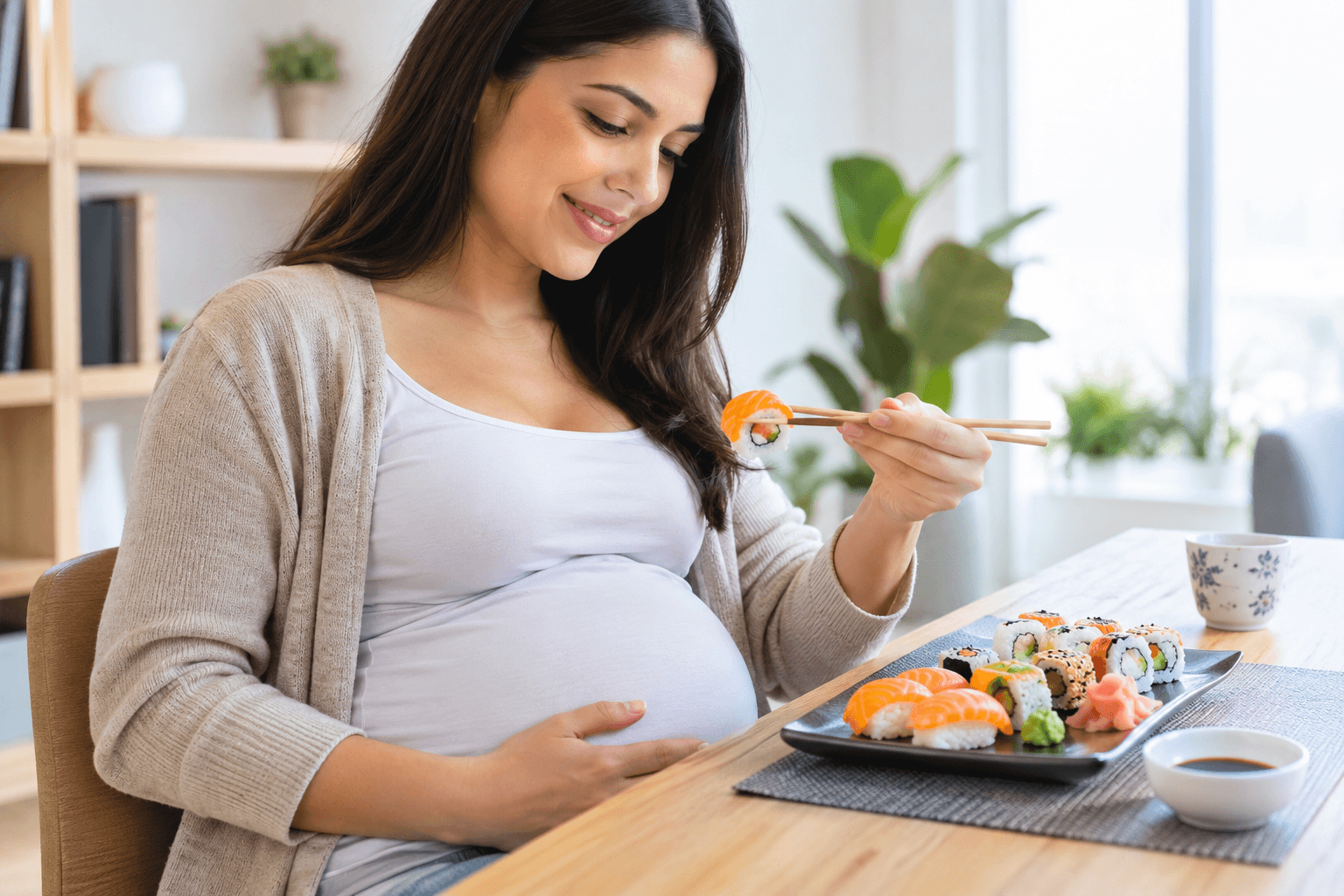
Pregnancy often comes with a long list of questions about food. One of the most common is: Can I eat sushi during pregnancy?
The answer depends on what is in the sushi and how the seafood has been prepared.
While fish can be an excellent source of protein, omega-3 fatty acids, vitamins, and minerals during pregnancy, pregnant women are advised to avoid raw or undercooked fish and shellfish because they can contain parasites or harmful bacteria. The FDA recommends choosing thoroughly cooked seafood and selecting fish that are lower in mercury.
This does not necessarily mean you have to give up sushi completely. With the right choices, you can still enjoy sushi-style meals while following pregnancy food-safety recommendations.
Why Is Raw Sushi Avoided During Pregnancy?
Raw fish can carry parasites and bacteria that are more likely to cause foodborne illness than properly cooked fish.
During pregnancy, foodborne infections can sometimes pose risks to both the mother and developing baby. For this reason, the FDA advises pregnant women to avoid raw or undercooked finfish and shellfish, including raw fish commonly served as sushi or sashimi.
This includes raw preparations such as:
- Raw salmon sushi
- Raw tuna sushi
- Sashimi
- Raw shrimp
- Raw scallops
- Raw oysters
- Raw shellfish
- Other sushi containing uncooked seafood
The safest approach is to choose seafood that has been thoroughly cooked.
Can You Eat Cooked Sushi During Pregnancy?
Yes, sushi made with thoroughly cooked ingredients can be an option during pregnancy.
For example, you might choose rolls containing:
- Cooked shrimp
- Cooked crab
- Cooked salmon
- Cooked chicken
- Cooked vegetables
- Avocado
- Cucumber
- Sweet potato
- Other fully cooked ingredients
The FDA recommends cooking finfish to an internal temperature of 145°F (63°C).
When ordering at a restaurant, don't assume that a roll is cooked simply because it does not look raw. Ask the restaurant staff exactly what ingredients are inside and whether the seafood has been fully cooked.
What About California Rolls?
California rolls are often made with imitation crab, cucumber, and avocado. Imitation crab is generally a cooked seafood product, but recipes and preparation can vary between restaurants.
If you are pregnant, ask what type of crab product is being used and whether any other raw seafood is included.
It is also worth remembering that food safety involves more than the seafood itself. Proper refrigeration, handling, preparation, and cleanliness are important when eating prepared foods.
What About Smoked Salmon?
Smoked salmon requires some additional attention.
Refrigerated smoked seafood can carry Listeria, a bacteria that can be particularly concerning during pregnancy. The FDA advises avoiding refrigerated smoked seafood unless it is used as an ingredient in a cooked dish.
Therefore, don't automatically assume that smoked salmon is a safer alternative to raw salmon simply because it has been smoked.
If you are unsure whether a smoked seafood product is safe, ask your Health Care Provider or choose a thoroughly cooked alternative.
What About Fish and Mercury During Pregnancy?
Food safety is only one consideration when choosing seafood during pregnancy. Mercury exposure is another important factor.
Some fish contain higher levels of methylmercury, which can affect a developing baby's nervous system when exposure is too high.
The FDA and EPA recommend that pregnant women eat 2 to 3 servings, or about 8 to 12 ounces, of a variety of fish from the "Best Choices" category each week.
Fish does not need to be eliminated from your pregnancy diet. In fact, fish provides nutrients that can support a healthy pregnancy and fetal development.
The goal is to choose seafood wisely.
Which Fish Should You Avoid During Pregnancy?
The FDA identifies several fish that should be avoided because they can contain high levels of methylmercury.
These include:
- King mackerel
- Marlin
- Orange roughy
- Shark
- Swordfish
- Tilefish from the Gulf of Mexico
- Bigeye tuna
Importantly, cooking does not remove mercury from fish. Choosing a lower-mercury species is therefore important regardless of how the fish is prepared.
What Fish Are Better Choices?
Many types of fish are lower in mercury and can be part of a healthy pregnancy diet when thoroughly cooked.
Examples from the FDA's lower-mercury "Best Choices" include options such as:
- Salmon
- Shrimp
- Pollock
- Tilapia
- Cod
- Catfish
- Canned light tuna
The FDA recommends eating a variety of lower-mercury fish rather than repeatedly choosing the same type.
Because fish recommendations can change based on species and serving frequency, checking the current FDA/EPA fish advice can be helpful when planning your pregnancy meals.
How to Order Sushi More Safely During Pregnancy
If you're going out for sushi while pregnant, a few simple habits can make your meal easier to navigate.
Ask About Every Seafood Ingredient
Don't be afraid to ask whether the fish or shellfish is cooked.
Words such as "sushi-grade" or "sashimi-grade" do not mean that raw fish is recommended during pregnancy. The FDA specifically advises pregnant women to avoid raw fish.
Choose Cooked Rolls
Look for rolls made with thoroughly cooked seafood or non-seafood ingredients.
You can also request a vegetarian roll if you prefer to avoid seafood altogether.
Be Careful With Sauces and Extras
The main concern may not always be the sushi itself. Some sauces or toppings can contain ingredients that should be limited or avoided during pregnancy.
If you're uncertain about an ingredient, ask the restaurant before ordering.
Choose a Reputable Restaurant
Food handling matters.
Choose establishments that appear clean and maintain appropriate food-storage and preparation practices. When dining out during pregnancy, the FDA recommends asking for fish and other foods to be cooked thoroughly.
What If You Accidentally Eat Raw Sushi While Pregnant?
If you accidentally eat raw fish before realizing it should be avoided, try not to panic.
Eating one serving does not automatically mean that something will go wrong. However, you should pay attention to how you feel and contact your Health Care Provider if you develop symptoms of foodborne illness or have concerns about the specific food you consumed.
Symptoms such as fever, vomiting, diarrhea, severe abdominal discomfort, or feeling unusually unwell during pregnancy deserve medical attention.
Your Health Care Provider can advise you based on what you ate, when you ate it, your pregnancy stage, and any symptoms you develop.
Can You Eat Sushi After Giving Birth?
Once you are no longer pregnant, the specific pregnancy recommendation to avoid raw seafood because of pregnancy-related vulnerability no longer applies in the same way. However, general food safety remains important.
If you are breastfeeding, fish choices still matter because mercury exposure can be relevant to your overall health and, depending on circumstances, your baby's exposure. The FDA's fish guidance also applies to women who are breastfeeding.
Your individual nutritional needs can also change during the postpartum period, particularly if you are breastfeeding.
Don't Give Up the Nutritional Benefits of Fish
Avoiding raw sushi during pregnancy does not mean avoiding fish altogether.
Fish can provide:
- High-quality protein
- Omega-3 fatty acids
- Vitamin D
- Iodine
- Iron
- Zinc
- Choline
The FDA notes that these nutrients can contribute to healthy growth and development, including brain and nervous-system development.
Choosing properly cooked, lower-mercury seafood allows many pregnant women to enjoy these nutritional benefits while reducing avoidable food-safety and mercury concerns.
Making Informed Food Choices During Pregnancy
Pregnancy nutrition does not need to feel like a list of everything you cannot eat. Instead, it can be an opportunity to learn which foods provide valuable nutrients and how to prepare them safely.
When it comes to sushi, the simplest rule is: avoid raw or undercooked seafood during pregnancy and choose thoroughly cooked, lower-mercury fish instead.
If you are unsure about a particular fish, sushi ingredient, supplement, or food during pregnancy, discuss it with your Health Care Provider rather than relying on assumptions or online food lists. A personalized approach can take your pregnancy, nutritional needs, health history, and preferences into account. For compassionate pregnancy nutrition guidance and comprehensive maternity support, connect with a trusted Holistic Care Provider or Health Care Provider at Clinique Molière, Brea, CA | (714) 948-5655 and make confident, informed choices throughout your pregnancy.