
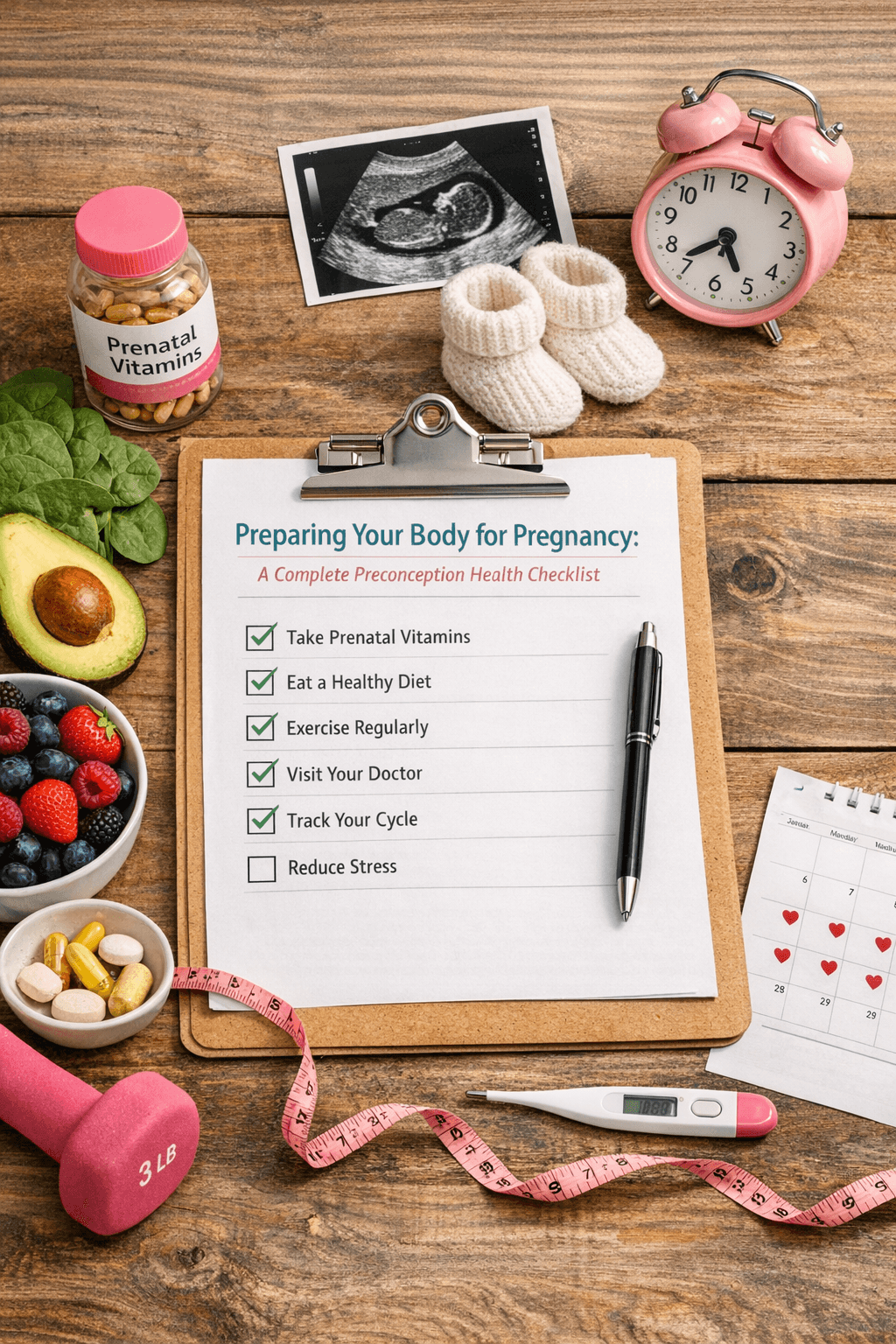
The journey to pregnancy begins long before a positive test. Preparing your body in advance creates a strong foundation for conception, supports a healthy pregnancy, and promotes smoother postpartum recovery. Preconception care is not about perfection—it is about awareness, balance, and proactive wellness.
By approaching pregnancy preparation holistically, women can strengthen their physical health, regulate emotional wellbeing, and enter this new chapter feeling confident and supported.
Below is a comprehensive preconception health checklist to guide your preparation.
1. Schedule a Preconception Visit
A dedicated preconception appointment with your Health Care Provider allows you to review your medical history, medications, lifestyle habits, and reproductive goals.
During this visit, you may discuss:
- Menstrual cycle patterns
- Previous pregnancies or losses
- Chronic conditions (such as thyroid imbalance or hypertension)
- Current medications or supplements
- Vaccination status
This visit ensures that any underlying concerns are addressed before conception.
2. Optimize Nutritional Status
Nutrition plays a foundational role in fertility and early fetal development. Preparing your nutrient stores before pregnancy supports both maternal health and embryonic growth.
Key nutritional considerations include:
- A high-quality prenatal vitamin with folate
- Adequate iron levels
- Sufficient vitamin D
- Balanced protein intake
- Omega-3 fatty acids
Focusing on whole, nutrient-dense foods—such as leafy greens, healthy fats, lean proteins, and whole grains—helps stabilize blood sugar and support hormonal balance.
3. Balance Hormones Naturally
Regular menstrual cycles are often a sign of balanced hormonal communication. If cycles are irregular, painful, or unpredictable, this may signal underlying imbalances that can be addressed before pregnancy.
Lifestyle factors that support hormonal health include:
- Consistent sleep routines
- Stress reduction practices
- Regular moderate movement
- Stable blood sugar through balanced meals
If needed, lab testing can evaluate thyroid function and other hormonal markers to ensure optimal readiness.
4. Manage Stress and Emotional Wellbeing
The mind-body connection is powerful in fertility preparation. Chronic stress can influence hormone regulation and overall vitality.
Incorporate stress-supporting habits such as:
- Mindful breathing exercises
- Gentle yoga or stretching
- Journaling
- Counseling or emotional support when needed
Preparing emotionally for pregnancy is just as important as preparing physically. A calm, supported nervous system fosters resilience during conception and beyond.
5. Achieve a Healthy Lifestyle Baseline
Small lifestyle adjustments can significantly impact fertility and pregnancy outcomes.
Consider:
- Limiting alcohol intake
- Avoiding tobacco and recreational substances
- Reducing processed foods
- Staying hydrated
- Maintaining a healthy weight
Moderate, consistent exercise supports circulation, mood stability, and metabolic health without overstraining the body.
6. Review Environmental Exposures
Environmental toxins can subtly influence hormonal balance and overall health. While complete avoidance is unrealistic, reducing exposure where possible can be beneficial.
Practical steps may include:
- Choosing clean personal care products
- Using glass or stainless steel for food storage
- Minimizing exposure to harsh chemicals
- Improving indoor air quality
These small changes support long-term reproductive wellness.
7. Evaluate Partner Health
Conception is a shared process. Encouraging your partner to adopt supportive health habits strengthens fertility outcomes.
Partner preparation may include:
- Balanced nutrition
- Regular exercise
- Limiting alcohol and tobacco
- Stress management
Open conversations about expectations, emotional readiness, and parenting goals also strengthen your foundation as a couple.
8. Track and Understand Your Cycle
Cycle awareness helps identify fertile windows and improves understanding of your body’s natural rhythm.
Tracking may include:
- Basal body temperature
- Cervical fluid changes
- Cycle length patterns
Understanding ovulation timing enhances confidence and reduces uncertainty during conception attempts.
9. Plan for Financial and Emotional Support
Preparing for pregnancy also includes practical planning. Consider:
- Maternity leave options
- Insurance coverage
- Support systems for pregnancy and postpartum
Feeling prepared logistically reduces stress and allows greater focus on your physical wellbeing.
10. Establish Ongoing Holistic Care
Preconception is not a one-time checklist—it is an ongoing process of nurturing your health. Building a relationship with a Holistic Care Provider ensures that physical, hormonal, and emotional factors are addressed comprehensively.
Personalized guidance allows you to adapt as your body transitions from preparation to early pregnancy.
Preparing your body for pregnancy is a powerful act of self-care and intention. By addressing nutrition, stress, hormonal balance, and lifestyle factors before conception, you create a supportive environment for both yourself and your future baby. You deserve care that listens, educates, and empowers you every step of the way. At Clinique Molière in Brea, comprehensive preconception and women’s wellness services are designed to help you move forward with clarity and confidence. Call (714) 948-5655 today to schedule your preconception consultation and begin your journey toward a healthy, supported pregnancy.