
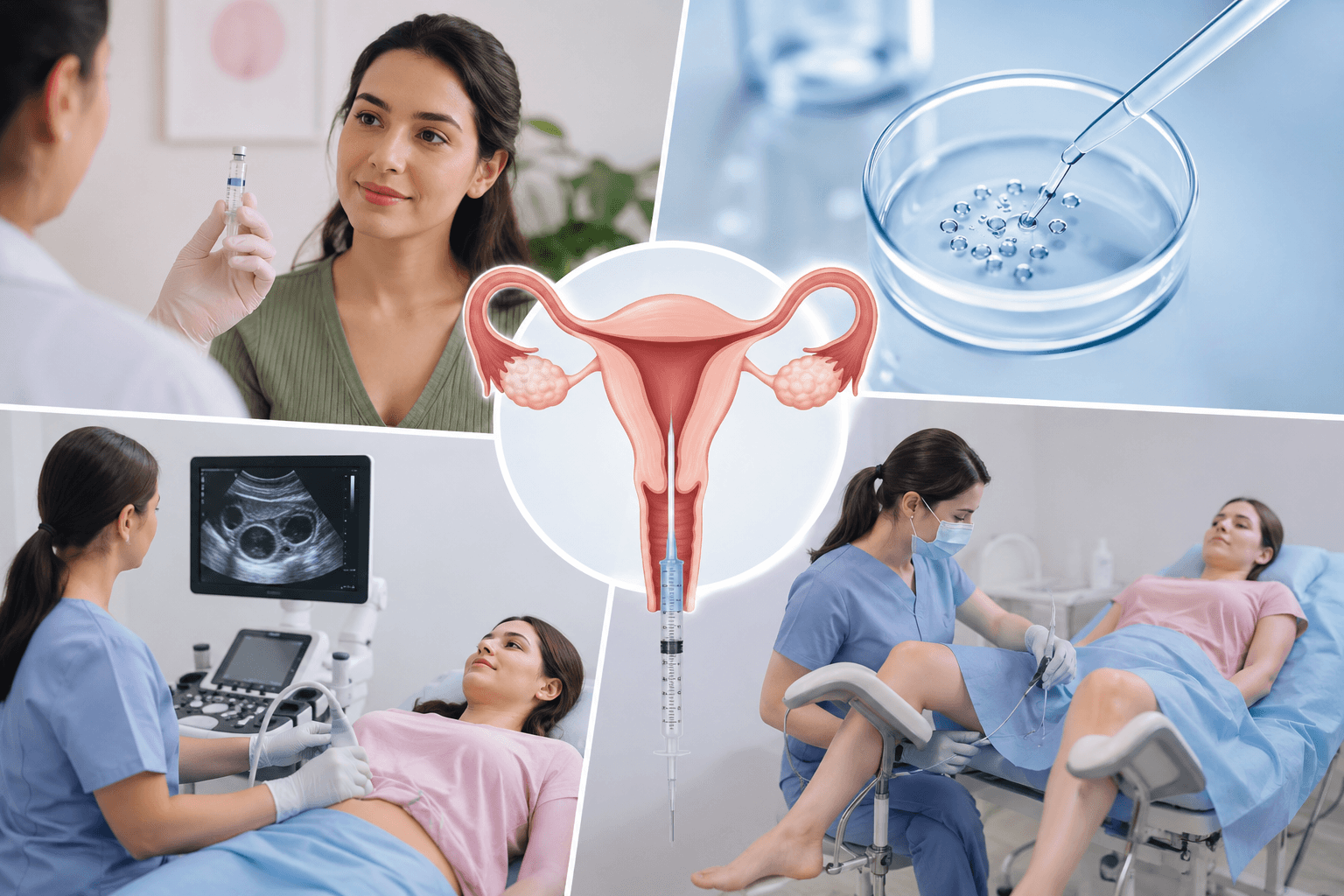
For many individuals and couples facing fertility challenges, taking the first step toward treatment can feel both hopeful and overwhelming. One of the most commonly recommended fertility treatments is Intrauterine Insemination (IUI)—a minimally invasive procedure that helps improve the chances of pregnancy by placing specially prepared sperm directly into the uterus around the time of ovulation.
Although the procedure itself is relatively simple, understanding each stage of the process can help reduce anxiety and set realistic expectations. From the initial fertility evaluation to the two-week wait after insemination, knowing what to expect allows you to feel more informed and confident throughout your fertility journey.
For individuals and couples in Brea and throughout California, personalized fertility care, compassionate support, and evidence-based guidance can make the path to parenthood more manageable.
What Is Intrauterine Insemination (IUI)?
IUI is a fertility treatment in which a concentrated sample of healthy sperm is placed directly into the uterus during ovulation. By shortening the distance sperm must travel to reach the egg, IUI may increase the likelihood of fertilization.
Unlike In Vitro Fertilization (IVF), fertilization during IUI still occurs naturally inside the body, typically within the fallopian tube.
Because it is less invasive than many other fertility treatments, IUI is often considered an early treatment option for certain fertility conditions.
Who May Be a Candidate for IUI?
A Health Care Provider may recommend IUI for individuals or couples experiencing:
- Mild male factor infertility
- Ovulation disorders
- Cervical factor infertility
- Unexplained infertility
- The use of donor sperm
- Certain same-sex couples or single individuals pursuing pregnancy
Your provider will determine whether IUI is appropriate based on your medical history, fertility evaluation, and reproductive health.
Step 1: Initial Fertility Consultation
The first step is a comprehensive fertility assessment.
During this visit, your provider may review:
- Personal and family medical history
- Menstrual cycle history
- Previous pregnancies
- Current medications
- Lifestyle factors
- Previous fertility treatments
Diagnostic testing helps identify the cause of infertility and determine whether IUI is the most appropriate treatment option.
Step 2: Fertility Testing
Before beginning treatment, several evaluations may be recommended.
These often include:
Hormone Testing
Blood tests help evaluate hormone levels involved in ovulation and reproductive health.
Ovulation Assessment
Your provider confirms whether and when ovulation occurs.
Uterine and Fallopian Tube Evaluation
Imaging tests may assess whether the uterus and fallopian tubes appear healthy and open.
Semen Analysis
A semen analysis evaluates:
- Sperm count
- Sperm movement (motility)
- Sperm shape (morphology)
These results help guide treatment planning.
Step 3: Ovulation Monitoring
Successful timing is one of the most important factors in IUI.
Depending on your treatment plan, ovulation may be monitored through:
- Ultrasound examinations
- Blood hormone testing
- Home ovulation predictor kits
Some women undergo IUI during a natural menstrual cycle, while others receive fertility medications to stimulate egg development.
When appropriate, your provider may also recommend an injection to help trigger ovulation at the optimal time.
Step 4: Preparing the Sperm Sample
On the day of the procedure, the sperm sample undergoes a laboratory process called sperm washing.
This preparation:
- Removes seminal fluid
- Separates healthy, motile sperm
- Eliminates debris
- Concentrates the healthiest sperm
The processed sample is then prepared for insemination.
Step 5: The IUI Procedure
The insemination procedure itself is typically quick and performed in a medical office.
During the procedure:
- You lie comfortably on an examination table.
- A speculum may be inserted to visualize the cervix.
- A thin, flexible catheter is gently passed through the cervix into the uterus.
- The prepared sperm sample is slowly introduced into the uterus.
- The catheter is removed.
The procedure usually takes only a few minutes.
Most women experience little or no pain, although mild cramping or brief discomfort may occur.
Step 6: Recovery After the Procedure
Recovery is generally simple.
Most patients can:
- Resume normal daily activities
- Return to work
- Continue light exercise if approved
Some women experience:
- Mild cramping
- Light spotting
- Temporary pelvic discomfort
These symptoms are usually short-lived.
Step 7: The Two-Week Wait
Following insemination, fertilization and implantation—if they occur—take place naturally.
The period before pregnancy testing is commonly known as the two-week wait.
During this time, many women experience a mix of emotions, including:
- Hope
- Excitement
- Anxiety
- Uncertainty
Your provider will advise when to take a pregnancy test, usually about two weeks after the procedure.
Factors That Influence IUI Success
Several factors affect the likelihood of pregnancy through IUI.
These include:
Maternal Age
Age plays an important role in egg quality and fertility.
Ovulation Timing
Proper timing between ovulation and insemination is essential.
Sperm Quality
Healthy sperm count and motility contribute to successful fertilization.
Overall Reproductive Health
The health of the uterus, ovaries, and fallopian tubes also influences treatment outcomes.
Success rates vary from person to person, and some individuals may require multiple IUI cycles before achieving pregnancy.
Is IUI Safe?
IUI is generally considered a safe procedure when performed by qualified healthcare professionals.
Complications are uncommon but may include:
- Mild infection
- Temporary cramping
- Light spotting
Your provider will discuss potential risks and answer any questions before treatment begins.
Supporting Your Fertility Journey
Healthy lifestyle habits may complement fertility treatment and support overall reproductive health.
These include:
- Eating a balanced diet
- Staying physically active
- Managing stress
- Getting adequate sleep
- Avoiding tobacco and excessive alcohol
- Following your provider's treatment recommendations
These habits promote overall wellness during fertility care.
Preparing Emotionally for Treatment
Fertility treatment is both a physical and emotional journey.
It is normal to experience changing emotions throughout the process.
Helpful sources of support may include:
- Your partner
- Family members
- Trusted friends
- Fertility counselors
- Support groups
- Your healthcare team
Open communication and emotional support can help you navigate treatment with greater resilience.
Taking the Next Step Toward Parenthood
An IUI procedure is often one of the first fertility treatments recommended because it is relatively simple, minimally invasive, and designed to support the body's natural fertilization process. Understanding each step—from your initial evaluation to the two-week wait—can help reduce uncertainty and empower you to participate actively in your care.
While every fertility journey is unique, working closely with an experienced healthcare team allows you to make informed decisions and choose the treatment plan that best aligns with your needs and family-building goals.
Your dream of growing your family deserves compassionate, individualized care. Work with a trusted Holistic Care Provider or Health Care Provider to explore whether IUI is the right option for your fertility journey. Clinique Molière, Brea, CA | (714) 948-5655 offers personalized fertility care, comprehensive evaluations, and ongoing support to help you move forward with confidence, hope, and expert guidance every step of the way.